|
Hiring an Italian legal translator is one of the most consequential decisions in your citizenship application. The wrong choice doesn't just waste money — it can set your application back by a year or more.
The problem is not just credentials on paper. It is whether the translator knows what the specific Italian authority receiving your documents actually requires. A translator with an impressive CV who has never worked with an Italian comune will produce a translation that looks professional but may fail on procedural grounds. The Two Levels of Italian Legal Translation Level 1 — Professional translation for informational use A translation of a legal document for a lawyer, an advisor, or for your own understanding. No authentication required. Quality matters, but there is no procedural format to follow. Level 2 — Sworn translation for submission to an Italian authority A translation that has been through the Italian court oath procedure and is formatted to satisfy the requirements of the specific receiving institution. This is what citizenship applications require. The oath procedure is standardised; the content requirements are set by the authority. The critical point: two sworn translations can both be "legally valid" and yet one can be rejected while the other is accepted, because they were built for different authorities with different requirements. Credentials That Actually Matter CTU (Consulente Tecnico d'Ufficio) enrollment Enrollment in an Italian court's register of technical consultants is the credential that authorises a translator to take the sworn oath before that court. Ask which court and for which language pairs. Direct experience with your specific receiving authority This is more important than any formal credential. A translator who works regularly with the comune, tribunal, or notary handling your case knows what they currently require — and requirements change. Ask directly: "Have you done sworn translations for [this type of authority] recently? What do they currently ask for?" Physical presence in Italy The translator must be able to appear at an Italian courthouse to take the oath. This is a logistical fact, not a credential — but it is non-negotiable. Experience with historical documents Italian citizenship cases often involve 19th and early 20th century civil registry records, handwritten in archaic legal language, sometimes from regions whose administrative history has changed (pre-unification states, territories that changed national borders). A translator without this specific experience will struggle with documents that are structurally standard but linguistically archaic. Credentials That Are Frequently Misunderstood US notarization A US notary certifies the identity of the signer, not the quality or suitability of a translation. A notarized translation is accepted by USCIS and many US institutions. It says nothing about whether the translation meets Italian requirements. "Certified" translation (generic) This term means different things in different countries. In the US it typically means a signed statement of accuracy. In Italy it is not a defined legal category — the defined category is the sworn/asseverated translation. When an Italian authority asks for a "certified" translation, they almost always mean sworn. ISO 17100 A quality management standard for translation agencies. Relevant for large agency clients. Does not confer any procedural standing before Italian authorities. ATA membership The American Translators Association credential is valuable for US-side work — it is recognized by US courts, federal agencies, and legal professionals, and requires passing a rigorous exam. It does not by itself qualify a translator to produce sworn translations for Italian authorities. However, a translator with both ATA membership and Italian CTU enrollment provides accountability on both sides of the Atlantic — useful when your documents need to satisfy requirements in more than one country. Questions to Ask Before Hiring "Which Italian authorities have you worked with recently, and for what types of documents?" You want specifics — comuni, tribunals, notaries, universities, the motorizzazione. A vague answer is a warning sign. "Do you translate the apostille and all stamps, seals, and annotations — not just the main text?" The answer should be yes, unequivocally. Any hesitation or qualification here means you are at risk of receiving an incomplete translation. "How do you handle the court appearance for the oath?" Expect a concrete, practical description: the court, the procedure, the timing, the duty stamps. Vagueness here suggests inexperience. "Do you have any financial relationship with citizenship agencies or lawyers you might refer me to?" An independent translator answers this directly. Red Flags
For Italian citizenship applications, the credential that matters most is not what is on paper — it is whether the translator knows what your specific receiving authority currently requires and can produce a translation that satisfies it.Verify physical presence in Italy, court enrollment, experience with your document types, and — above all — direct experience with the type of authority handling your case. Natalia Bertelli is a CTU-enrolled sworn translator based in Italy and a member of the American Translators Association. She works regularly with Italian municipalities, tribunals, and notaries for citizenship, legal, and real estate matters. Her clients are based in the US, Canada, Australia, and the UK. Need help with your translations? What Is a Sworn Translation in Italy? (And Why It Matters for Your Italian Citizenship Application)4/28/2026
If you are applying for Italian citizenship — whether by descent (jure sanguinis), by marriage, or through naturalization — you will encounter a requirement that confuses almost every applicant: your documents need a sworn translation. Not a "certified translation." Not a translation with a stamp from a US notary. Not the translation you used for your consulate appointment three years ago. A sworn translation in Italy, also called traduzione giurata or traduzione asseverata, is a specific legal procedure. But the more important point — the one most guides get wrong — is that the requirements for that translation depend entirely on which Italian authority will receive it. A comune, a tribunal, a university, and a notary each expect something different. A translation built for one will often fail at another. This article explains what sworn translation is, how it works, and why the format of your documents needs to match the specific authority you are dealing with. What Is a Sworn Translation in Italy? A sworn translation in Italy is a translation that has been authenticated by a translator appearing before an Italian court official and swearing under oath that the translation is accurate and complete. This oath gives the translation legal standing before Italian authorities. The process produces a physical bundle of documents:
Who Can Perform a Sworn Translation in Italy? A translator enrolled in a court's register of technical consultants (CTU — Consulente Tecnico d'Ufficio) can perform a sworn translation by appearing in person at the courthouse and taking the oath. Translators based outside Italy can also produce translations that Italian authorities accept — but this is where the practical complications arise. The issue is rarely about who produced the translation. It is about what the translation contains and how it is formatted. The Real Problem: Every Italian Authority Has Different Requirements This is the point that most guides and agencies gloss over, and it causes enormous frustration for citizenship applicants. A translation produced for the Italian Consulate in New York is built to satisfy what that consulate asks for. A translation produced for USCIS is built to satisfy US immigration requirements. Neither of these is automatically suitable for an Italian comune, a tribunal, or a notary — because each of those institutions has its own expectations about:
A translator who works regularly with Italian authorities — and specifically with the authority handling your case — knows exactly what that authority requires. This is what you are actually paying for: not just linguistic accuracy, but procedural knowledge of the receiving institution. Sworn Translation vs. Certified Translation: Clearing Up the Terminology These two terms are used loosely and inconsistently across countries. Here is what they typically mean:
The key insight is that none of these terms defines a single universal standard. A "sworn translation" produced by a CTU-enrolled translator in Italy for a comune in Veneto may look different from one produced for a tribunal in Campania. The oath procedure is the same; the content requirements are set by the receiving authority.
Why Documents Need Apostilles Before Translation For Italian citizenship applications by descent, most vital records from foreign countries need to go through two steps before they can be submitted to an Italian authority:
What to Look for in a Sworn Translator for Citizenship Applications Experience with the specific receiving authority Ask specifically whether the translator has worked with the comune, tribunal, or consulate handling your case. Requirements vary and change. A translator who works with Italian municipalities regularly will know current practice; one who works primarily for consulates may not. Complete translation — including apostilles and all annotations Verify that the translator translates every element of the document: the main text, all stamps, all seals, the apostille, any handwritten annotations, any marginal notes. Anything left untranslated is a potential rejection point. Physical presence in Italy for the oath The sworn oath must be taken in person at an Italian courthouse. This is a logistical requirement, not just a formality. Independence from citizenship agencies A translator with no financial relationship to citizenship agencies, genealogists, or lawyers can give you objective advice about what your documents need and refer you to other professionals without any conflict of interest. A sworn translation in Italy is not simply a more official version of a certified translation. It is a specific procedure whose output must match what the receiving Italian authority requires — and those requirements vary between institutions. The translation you had done for a consulate, or for US immigration, was probably built for that specific context. Before submitting anything to an Italian comune, tribunal, or notary, make sure the translation was prepared with that authority's requirements in mind. Natalia Bertelli is a sworn translator based in Italy, enrolled as a CTU (Consulente Tecnico d'Ufficio) with the Italian court system and a member of the American Translators Association. She specializes in Italian citizenship documents and works regularly with Italian municipalities, tribunals, and notaries for clients in the US, Canada, Australia, and the UK. Need help with your translations? Email me! Long story short: before 27 March 2025, there was almost no restriction on the number of generations you could go back to get your Italian dual citizenship. You only had to prove an unbroken chain of citizenship.
In March 2025, Law 74/2025 was passed and imposed a strict generational limit (2 generations max), plus exclusive citizenship requirements and other provisions for children born abroad (handy infographic here and full breakdown here) On March 12, 2026, the Italian Constitutional Court issued a note after a much-anticipated hearing, basically upholding the 2025 law. So, what now? You can still apply if: 1) your case was filed before March 27, 2025 (old rules apply) 2) you had tried to get an appointment at any consulate but failed due to the consulate's lack of appointments (and you have evidence like emails, wait lists...) 3) yours is a 1948 case (discrimination of mothers). This law is constitutional, so it's unaffected by Law 74/2025 4) you meet the new Law provisions So, what now? Strategy is more important than ever, so reach out to a consultant or a lawyer, and start collecting your documents because it does take a long time. What other routes are available? Maybe you can try a long-term visa and then naturalize after 2 years. Need help? I can recommend both consultants and lawyers, for free! If your records are ready for translation, just let me know! A client sent me this Reddit thread and I thought it would be good to post it here too. Read what Avvocato Michele Vitale says about the potential changes for your application on June 24th, 2025. And if you're thinking about applying, my advice is to just do it before then!
After a period filled with speculation, conflicting legal opinions, and a growing sense of uncertainty, Italy's Constitutional Court has finally scheduled the date for its pronouncement on the constitutionality of Italian citizenship law – specifically, the principle of jus sanguinis. The very basis of Italian citizenship law, as we currently know it, is about to be examined closely. Circle this date: June 24th, 2025. This day could be a real turning point, a potentially major legal shift that could reshape Italian citizenship for generations down the line. For those who have been planning, dreaming, and working hard to get their Italian citizenship recognized, this date is both a beacon of hope and a cause for real anxiety. A Meeting of Minds (and Legal Orders): Bologna and Campobasso Rulings Converge at the Constitutional Court The Constitutional Court's decision comes at a time when there's a lot of discussion and tension around citizenship law. Recently, we've seen several things happen at once, creating a perfect storm, if you will, and bringing this issue right to the heart of Italy's constitutional justice system. It all started with a ruling from the Bologna Tribunal, issued back on November 26, 2024. This ruling actually raised some doubts about whether Law No. 91 of 1992, the law that governs Italian citizenship, is constitutionally sound. This Bologna decision, which echoed concerns that some legal experts and academics have had for a while, questioned a really key part of the law: the jus sanguinis principle itself and how it's applied without any time limits. The Bologna Tribunal, acting on its own initiative, flagged this potential unconstitutionality in a pretty telling case involving a family of 12 from Brazil. These individuals are claiming Italian citizenship solely because they have an Italian ancestor – born way back in 1876, who emigrated from Italy when young – compared to many other ancestors who weren't Italian. This specific case really puts the spotlight on a core question the Constitutional Court is looking at: how far back in time should bloodline extend as a way to pass on citizenship? To really understand what this Bologna ruling means, we need to realize that the court is questioning whether the current way citizenship law is set up, mainly based on bloodline, still fits with constitutional principles and how international law on citizenship has evolved. The ruling isn't just about one specific situation; it opens up a wider question about whether our current system for passing on citizenship is still right for today's very different social and demographic situation. Making things even more complex, a ruling that went the opposite way came from the Tribunal of Campobasso, in Molise. This court recently turned down a challenge to constitutionality that was similar to the one from Bologna. Instead, the Campobasso court defended the current way citizenship law is understood, saying it fully lines up with constitutional principles. Basically, Campobasso took a firm stand for keeping the jus sanguinis citizenship recognition system as it is, stressing its historical and cultural importance for Italy. Some Italian courts, while they wait for the Constitutional Court to speak, have even put citizenship recognition processes on hold, which shows just how much uncertainty and impact this issue has. These two rulings, from different level courts but on closely linked questions, have created a situation of legal uncertainty unlike anything we’ve seen before. The Constitutional Court is now at a real crossroads: either confirm how the law is currently understood, reassuring millions of people with Italian roots around the world, or agree with Bologna’s arguments, which could lead to big changes and maybe even question the whole jus sanguinis system. It's a first – the Constitutional Court is being asked to rule on jus sanguinis citizenship principle. The Hearing Date Decree: The Clock is Ticking The release of the decree setting the hearing date – which we've gone over carefully – officially starts the countdown. This decree, from the Constitutional Court, makes June 24th, 2025, the official day when the constitutionality of citizenship law will be discussed and decided. The decree, marked with general registry number 70/2024, clearly points out the issue raised by the Bologna Tribunal: the alleged constitutional problem with Article 1, paragraph 1, letter a), of Law 91/1992, specifically how it deals with recognizing Italian jus sanaguinis citizenship without any time limits. While the decree mentions the specific Bologna case, it's really important to understand that the Constitutional Court is actually looking at the whole principle of jus sanguinis and whether it fits with constitutional principles. Simply put, the Constitutional Court has to decide if the current setup of citizenship law, mainly based on bloodline, is still fully in line with the Italian Constitution in today's social, demographic, and legal world. Legal Heavyweights: Key Names and Strategies in Play In this really important legal battle, it's not just about the Constitutional Court judges. It's also about the lawyers who are lined up on different sides. Looking at the decree setting the hearing date, we see some key names who will be representing the different sides and who will have to argue their points to the constitutional judges. The Bologna Tribunal, which raised the constitutionality question, won't be directly involved in the constitutional court proceedings. Basically, their job was to write and send the referral order (which contains the constitutional legitimacy question) to the Court, along with all the necessary documents and legal briefs. From that point on, the Court handles the issue, with the original parties in the case and, for the State, the State Attorney's Office actively participating. The State Attorney General's Office (“Avvocatura dello Stato”) is the legal arm that represents the Italian State and government agencies in constitutional court cases. They usually argue against challenges to the validity of laws raised by individual judges or other parties. In practice, they aim to defend the legitimacy of laws, often taking a pretty standard defensive approach. However, in rare cases, the Attorney's Office, instructed by the government, might choose not to get involved, or less often, take a position that's closer to what the judge argued if the law seems especially problematic or against basic constitutional principles. In this particular case, the Italian government (through the Attorney's Office) has decided not to participate in the proceedings, choosing not to defend the current law as it stands. However, the private individuals involved in the original case that led to the Bologna Tribunal's ruling will be involved in the proceedings. They are represented by lawyers Marco Mellone, Antonio Cattaneo, and Franco Antonazzo. The hearing date decree also mentions that two associations – AGIS (Association of Jurists Iure Sanguinis) and AUCI (United Lawyers for Italian Citizenship) – have joined the proceedings, represented by lawyers Diego Corapi, Patrizio Ivo D’Andrea, and Massimo Luciani. These are big names for a major legal showdown. And interestingly, Massimo Luciani has recently been appointed as a Judge of the Constitutional Court itself (though he will, of course, recuse himself from judging this case to avoid any conflict of interest). What Happens on June 24th? Possible Outcomes and What They Mean So, what will happen on June 24th, 2025? Nobody can say for sure. The Constitutional Court is independent, and its decisions are final. But, we can think about some possible scenarios and what each could mean. The hearing on June 24th, 2025, will kick off with the judge acting as "relatore" (rapporteur) presenting the case. Then, the lawyers for the parties involved in the proceedings will make their arguments. It’s expected that the hearing and the discussion will be made available online on the Constitutional Court’s website pretty quickly, maybe even the next day, so the process is as transparent as possible. After the hearing discussion, the Constitutional Court will go into deliberation to make its final decision, which might be announced publicly some weeks later. Scenario 1: Current Law Stands In this scenario, the Constitutional Court could reject the constitutional questions raised by the Bologna Tribunal and say that the current way citizenship law is understood is completely legitimate. This would mean the jus sanguinis citizenship recognition system stays pretty much as it is now. Millions of people worldwide with Italian heritage could breathe a sigh of relief and keep going with their Italian citizenship applications under the current rules and procedures. This scenario would be a win for keeping things consistent and predictable in the Italian legal system. And, many experts in the field think this is the most likely outcome. Scenario 2: Partial Changes In a middle-ground scenario, the Constitutional Court might partially agree with the constitutional questions from Bologna. For example, the Court could say that some specific parts of jus sanguinis need to be revised, without totally overturning the whole system. This could lead to changes in the rules and processes for recognizing citizenship in certain situations, perhaps introducing stricter requirements or time limits through legislative changes by Parliament. The effects of this scenario would be more complex and would need careful study to fully understand what the changes mean and how they affect people applying for citizenship. Scenario 3: Major Overhaul The most radical and potentially disruptive scenario (but also the least likely) would be if the Constitutional Court fully agreed with the Bologna Tribunal’s constitutional questions and declared that the current citizenship law is unconstitutional because it's based on jus sanguinis. This would be a real legal earthquake. The consequences would be hard to predict and potentially very significant. The jus sanguinis citizenship recognition system could face a major overhaul, impacting everyone applying. It’s really important to note that even in this scenario, any big changes to the principle of citizenship and Law 91/92 would have to go through Parliament, which is in charge of making laws in this area. The Constitutional Court can’t just replace Parliament in setting citizenship rules; it can only declare existing laws unconstitutional. This scenario would create a lot of uncertainty and a huge political and legal debate, and it would open the door for Parliament to step in and redefine the core principles of Italian citizenship. June 24th, 2025, is coming up fast. Whatever happens, This decision will mark a key point in the discussion around Italian citizenship law. The future of Italian jus sanguinis citizenship is now in the hands of the Constitutional Court. Avvocato Michele Vitale Need help with your application? Email us! Hey everyone!
There's a new provision in the 2025 budget bill in Italy that might affect people applying for Italian citizenship. It's called Article 106, and basically, if you're trying to get recognized as an Italian citizen, you might have to pay €600 to the Court. This fee applies to each person applying, even if you're submitting your application with others. This could end up making it a lot more expensive for those who are trying to become Italian citizens, especially for those who have been Italian from birth. Just a heads up, though, this Article 106 still needs the Parliament's final approval. If it goes through, it'll start on January 1, 2025. Just wanted to give you all a heads up about this potential change! If you are not living under a rock, you've heard of this circolare (download here) from the Ministry of Interiors regarding the so called minor case. It has been effective as of October 3rd and applies to citizenship applications through consulates and comunes.
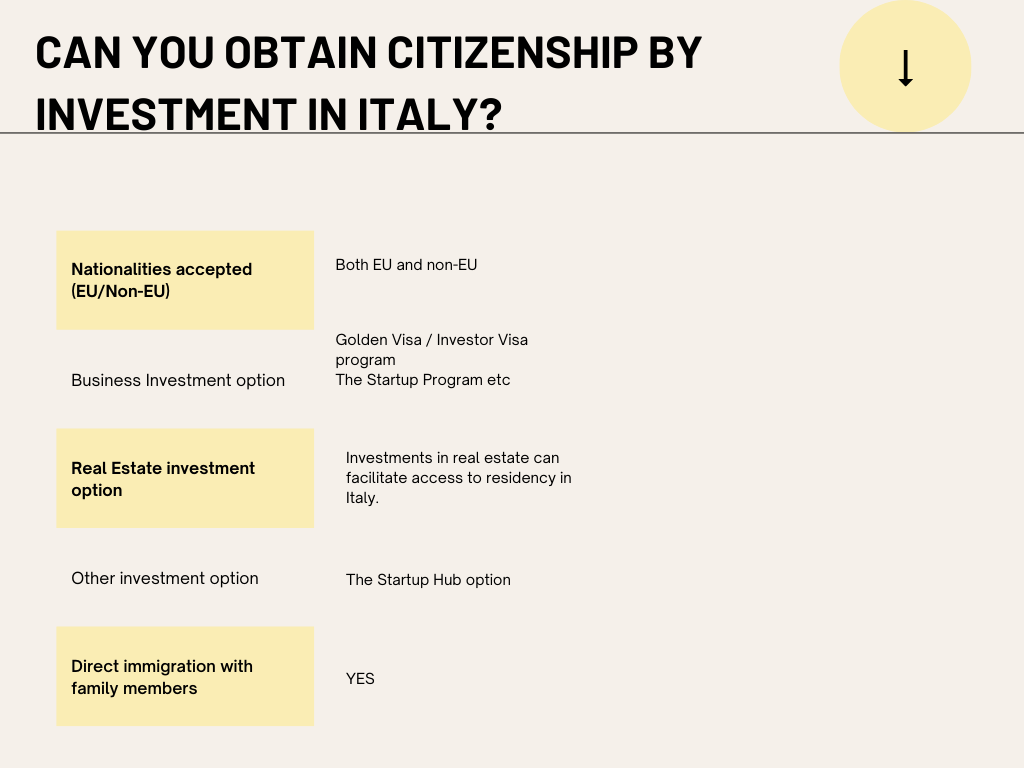
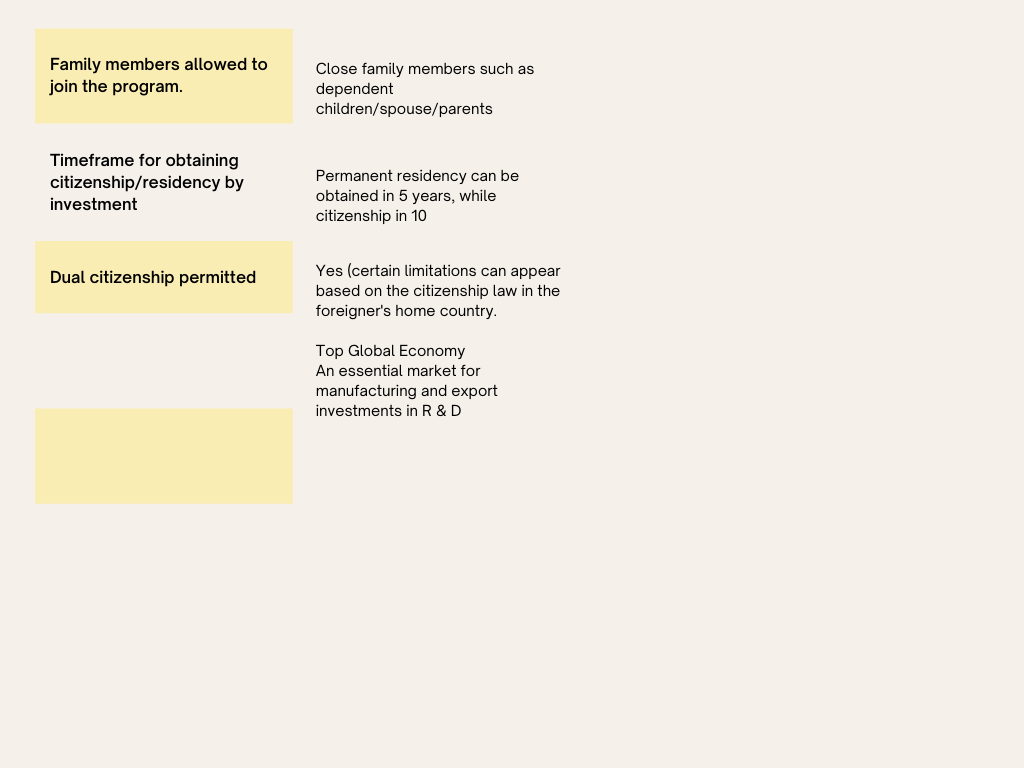
It seems that for now, the only way to go would be through the courts. However, there is still much confusion about this interpretation of the law. On October 19, Bettina and Jennifer from Italian Citizenship Concierge ICC will be discussing this with lawyers and government officials, so....save the date! As American retirees look to spend their golden years in comfort and fulfillment, many are setting their sights on Italy. This enchanting country, renowned for its breathtaking landscapes, rich cultural heritage, and vibrant lifestyle, offers an irresistible allure for those seeking a new chapter abroad. Beyond its picturesque beauty and historical treasures, Italy presents a compelling combination of economic advantages, high-quality healthcare, and a warm, welcoming community. These factors, among others, make Italy an increasingly popular destination for U.S. retirees eager to embrace la dolce vita—the sweet life.
If you decide to settle in Italy, you'll probably need to have your academic title officially recognised. (If you want to know more, email me).
That's no easy feat. You truly need an expert. So just go on and read my interview with Michela de Julio, the expert for Italy. Over the past few weeks I have been talking with some very interesting professionals about Italian dual citizenship. But there are several reasons why someone would settle in Italy, and this is the realm of relocation and global mobility experts such as Damien O’ Farrell. Read on this fascinating interview!


Getting your Italian citizenship starts with collecting your documents, then understanding if you're eligible and applying, right? And then comes the fun part: settling down and paying your taxes! That's what we're going to discuss today with Paolo Rigo, an international tax advisor from Studio Rigo, Verona, Italy!

|
AuthorNatalia Bertelli has been an English/Spanish to Italian sworn translator. since 2008, specializing in official translations for dual citizenship and relocation purposes. Categories
All
|